Questions arise when Senator Stoddard attends the funeral of a local man named Tom Doniphon in a small Western town. Flashing back, we learn Doniphon saved Stoddard, then a lawyer, when he was roughed up by a crew of outlaws terrorizing the town, led by Liberty Valance. As the territory's safety hung in the balance, Doniphon and Stoddard, two of the only people standing up to him, proved to be very important, but different, foes to Valance.
| Tagline | Together for the first time |
| Release Date: | Apr 13, 1962 |
| Genres: | Western |
| Production Company: | John Ford Productions, Paramount Pictures |
| Production Countries: | United States of America |
| Casts: | John Wayne, James Stewart, Vera Miles, Lee Marvin, Edmond O'Brien, Andy Devine, Ken Murray, John Carradine, Jeanette Nolan, John Qualen, Willis Bouchey |
| Status: | Released |
| Budget: | $3200000 |
| Revenue: | 8000000 |
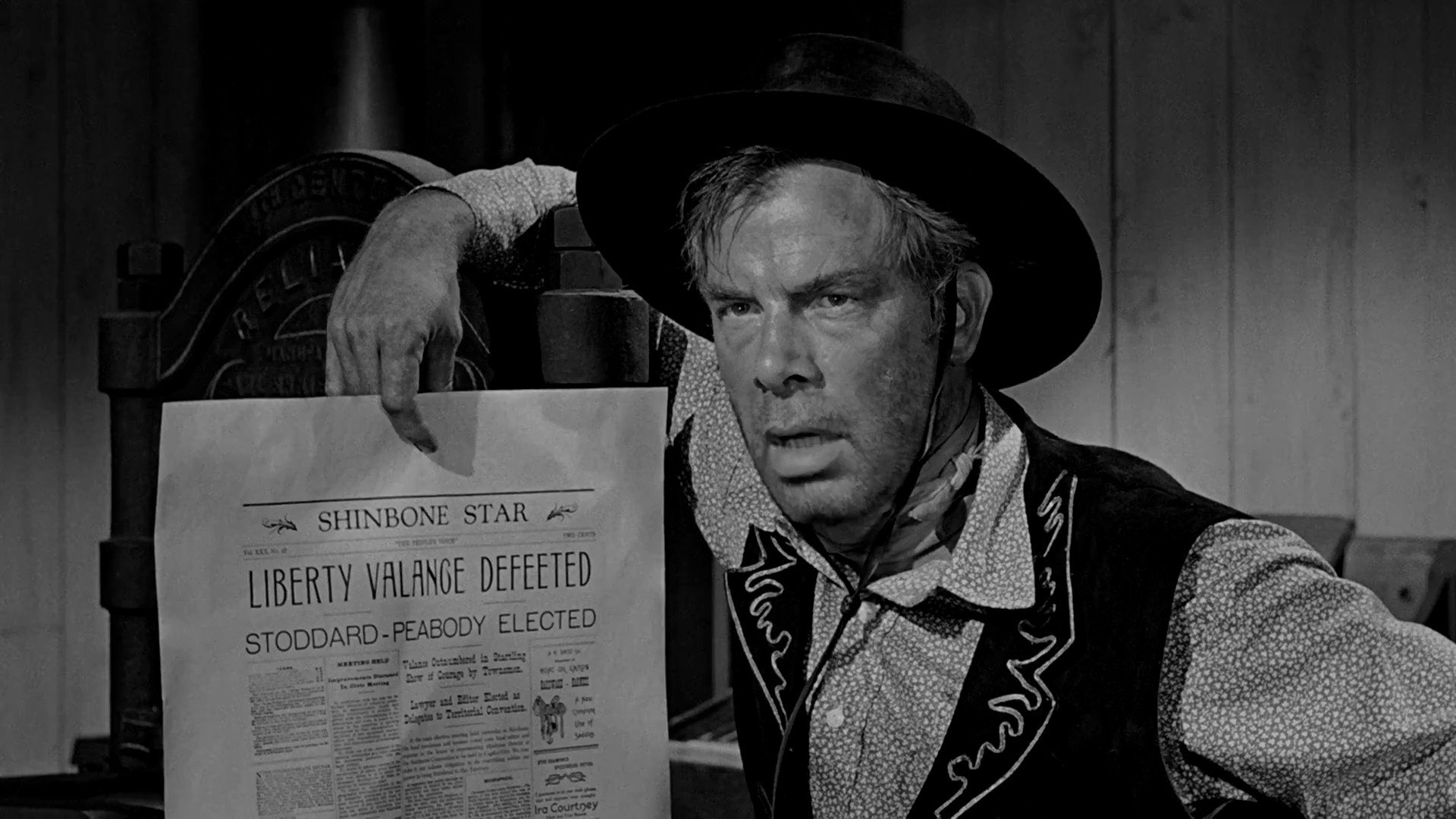
The Man Who Shot Liberty Valance (1962) Directed by John Ford Well, it is an old Western, so it's all about bullies, and how they invariably lose to a more powerful bully. Liberty Valance (Lee Marvin) terrorizes the town with violence; he's replaced by lawyers, politicians, and the machinery of government. Same power dynamics, more sophisticated weapons. The famous line "When the legend becomes fact, print the legend" isn't inspiring, it's cynical. The film is about how America built its mythology on lies, how the people who write history aren't necessarily the heroes they claim to be. This is probably the best screenplay of the John Ford Westerns. It's quite different in that it depends totally on the narrative and not action alone. Ford stripped away the vibrant landscapes, the Monument Valley vistas, the horseback chases, and gave us a claustrophobic black-and-white melodrama built on words, memory, and moral compromise. For that reason, James Stewart with his trademark self-effacing style was absolutely the perfect actor for this film. He plays Ransom Stoddard as a man who has benefited from a lie his entire life and can't quite reconcile what that cost him, or what it cost Tom Doniphon (John Wayne). The black-and-white cinematography, the direction, and the acting were all fantastic. Ford made a Western about the death of the West, shot it like a funeral, and gave us one of the finest examinations of American myth-making ever put on screen. It's a film about how we tell ourselves stories to justify power, how the victors write history, and—well, Pilgrim, how uncomfortable it is when someone finally tells the truth.

