A gunfighting stranger comes to the small settlement of Lago. After gunning down three gunmen who tried to kill him, the townsfolk decide to hire the Stranger to hold off three outlaws who are on their way.
| Tagline | They'd never forget the day he drifted into town. |
| Release Date: | Apr 19, 1973 |
| Genres: | Western, Drama, Mystery |
| Production Company: | Malpaso Productions, Universal Pictures |
| Production Countries: | United States of America |
| Casts: | Clint Eastwood, Verna Bloom, Marianna Hill, Mitchell Ryan, Jack Ging, Stefan Gierasch, Ted Hartley, Billy Curtis, Geoffrey Lewis, Scott Walker, Walter Barnes |
| Status: | Released |
| Budget: | $5500000 |
| Revenue: | 15700000 |
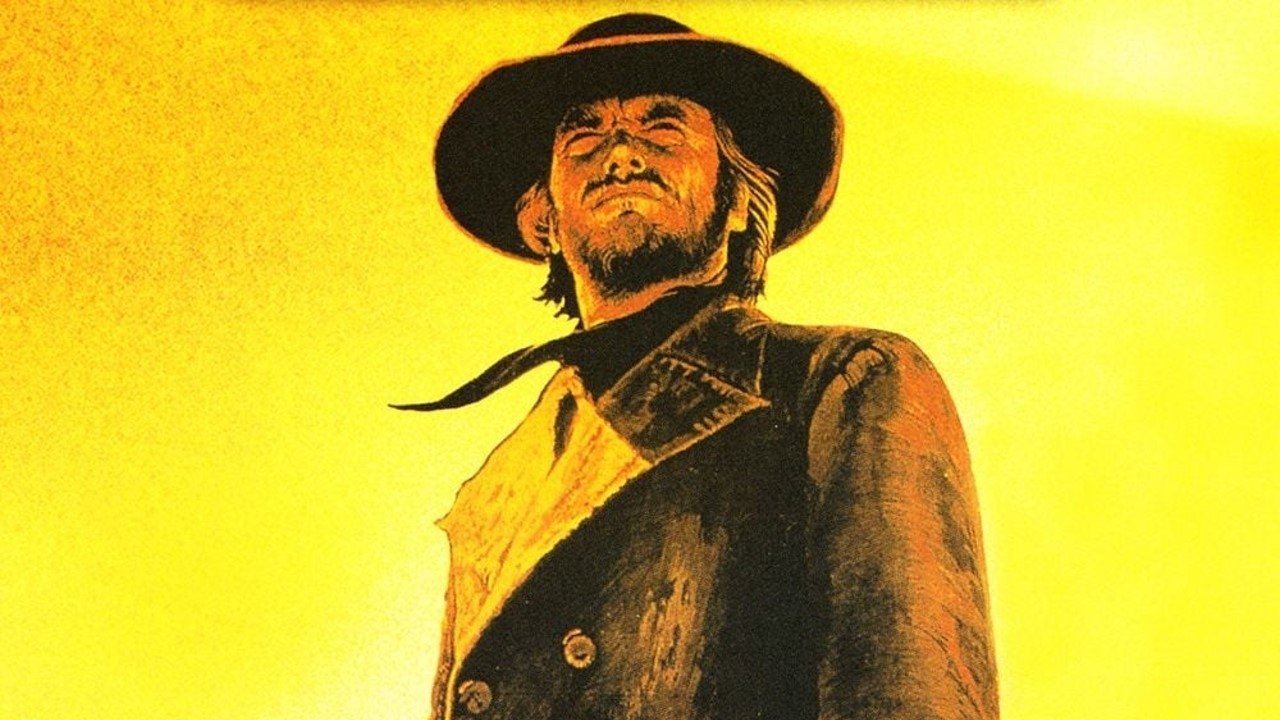
Supernatural Western? A lone gunman with no name and seemingly with no past, rides into the dusky town of Lago. The residents of Lago at first view the stranger with suspicion, but when news that some outlaws that are out for blood are on their way to town, they ask the stranger for his help. This is Clint Eastwood's first Western film that he directed, and it's clear and evident that the guy not only loves the genre that made his name, he also knows what makes it work. Obviously having worked for Sergio Leone, Eastwood was making notes because High Plains Drifter oozes the mythical aura of many of Leone's finest genre offerings. To which, with thanks, the result is one of the best offerings in the 70s for the Oater enthusiast. The film opens with our mysterious drifter slowly coming out of the beautiful sprawling haze and into Lago, it's ethereal, then there's just the sound of the horse breathing and the clop of its hooves that can be heard (the sound mix here is incredible), it's a gloriously mysterious opening that sets the tone perfectly. Yet Eastwood is just toying with us though, for a quick jolt of sex and violence snaps us out of the beatific warmth and into a quite hauntingly cold and morally challenged place. From here on in the stranger will demand all manner of odd things from the residents of Lago, he seems to be toying with them and revelling in their discomfort, with Lago quickly resembling an arid hellhole. You see, Lago has a dark secret, and our mysterious stranger has a purpose, and it's this purpose that makes High Plains Drifter an intriguing and gripping experience. A well known fact now is that the great man of the genre, John Wayne, wrote Eastwood to strongly complain about his harsh vision of the West, one can only think the Duke failed to grasp the post Vietnam feel of a 70s made Western. It's a great directorial effort from Eastwood, more so when you marry up his acting performance to his directorial duties. Very much the perfect role, it lets Eastwood accentuate his rugged Western leanings. Eastwood would direct the similarly themed Pale Rider in the 80s and then the genre crown topper Unforgiven in the 90s. A Western great in each decade? Well that will always be debatable, but what we do know is that the Western genre was considerably lucky to have had such a man to keep the genre going for the newer interested wanderers into the Wild West. Beautifully photographed (Bruce Surtees) on the shores of Mono Lake, California, it's a film pungent with sex, sadism, retribution and risks. High Plains Drifter is mystical and magnificent and essential Western fare. 9/10
I don't have much to say about 'High Plains Drifter'. It didn't thrill me or anything, but it did keep my attention from start-to-finish so it's evidently a good film. Clint Eastwood is the only cast member worth talking about, he gives a commanding performance in the lead role. Geoffrey Lewis, a frequent castmate of Eastwood's, is the best of the rest, if I had to pick. The film does feature dark themes, which helps the film's pacing out a lot. It's nothing special in my eyes, though there is entertainment there no doubt. It's a borderline 8* rating for me, but not quite.
Another Hollywood (spaghetti) formula Western where homicidal maniacs abound. Here, Clint plays a homicidal maniac who obviously comes back from the dead after being killed by three bad guys and betrayed by an entire town of people. So, the first thing he does is murder the only three men who weren't part of that. Makes sense? Not if you're looking for credible motivation. But credible motivation isn't a part of most of Eastwood's Westerns. Certainly not the spaghetti ones. So, the rest of the movie is just sound and fury, signifying nothing, and don't try to make sense out of any of it. It's just another movie about homicidal maniacs being everywhere. If the West or East or anywhere was anything like this, there wouldn't be anyone left in one piece to keep a town going. They'd all either be dead or crippled. But Eastwood loved to be in that sort of thing. A hundred years from now, he'll be remembered for many good Westerns like Hang Em High and Joe Kidd, and his Rawhid series, and Dirty Harry, because he played credible characters in those. He doesn't do that here.
**_Clint paints the Western town red, like Gehenna_** A mysterious Stranger (Eastwood) trots into a remote town in west-central California, a dozen miles from the Nevada border. The townspeople desperately need his help to prepare for the release of three vengeful men from the territorial prison. "High Plains Drifter" (1973) was Clint’s third directorial effort (although he also did some uncredited work on “Dirty Harry”). It parallels his “Pale Rider” from a dozen years later with the difference that Preacher from “Pale Rider” is essentially righteous and therefore protects worthy people whereas Stranger in this flick is vengeful, focusing on dishing out retribution to those who are bad. The fact that there are few ‘good’ people in Lago makes you root for the Stranger, to a degree, but it also prevents the viewer from having compassion for the townsfolk. There’s also an emptiness and tediousness to the proceedings that works against the movie. Still, this is an iconic Eastwood Western and holds up in its unique, nigh satirical way. The beautiful Marianna Hill plays the blonde, Callie. She was 30 years-old during shooting. You might remember her from the Star Trek episode “Dagger of the Mind” from seven years prior. She was one of the most winsome women to appear on Star Trek and had gigs in numerous television shows throughout the 60s and 70s, as well as quite a few films like Elvis' "Paradise, Hawaiian Style,” this one, and even starred in the atmospheric horror flick "Messiah of Evil” (aka “Dead People”), which came out the year after this. It was the pinnacle of her career and she faded out of acting after 1977. The film runs 1 hours, 44 minutes, and was shot at Mono Lake, California (the town of Lago), which is northeast of Yosemite National Park (with the west side of the lake being in the park), as well as Winnemucca Lake, Nevada, which is about 170 miles due north of Mono Lake. GRADE: B/B-
Now we are used to Clint Eastwood playing the poncho-clad man of few words in westerns, but this one has an altogether spookier thread to it. When he arrives into a dead end town he is immediately challenged by three ne’er do wells whom he effortlessly despatches. The townsfolk are not so much terrified as they are impressed and so they ask him to stick around and help protect them from three more thugs who have threatened to burn down their town. Now you’d have thought that had these townspeople just placed themselves on their rooftops with rifles, then they could easily have picked off three men on horseback, but this town really ought to have been on the “yellow” brick road, so they need outside help. He agrees, after a fashion, but exerts his own unique price on this citizenry whilst all the while we see flashbacks of a man being brutally bullwhipped by three men in the street. This isn’t so much a film about a man with no-name as a film about someone or something distinctly devilish. A man with no soul? He isn’t a nice man, a decent or kindly soul, indeed he is probably every much a brute as those about to descend on the town and so engenders little affection from his employers, or the audience watching. We certainly ought not to trust him, nor his motives, and by the highly effective denouement we sense that his search for his pound of flesh won’t end here. As you might expect, it is violent and bloody and the ensemble cast - including a winning effort from Billy Curtis and compelling ones from Verna Bloom’s “Sarah” and Marianna Hill's "Callie" who are given quite pivotal roles in the proceedings, all deliver a film that unfolds in a seedy and yet fittingly valedictory fashion. Even now, it’s not for the squeamish and is more in the “Unforgiven” vein of this genre, but it’s well worth a watch.
The Stranger (director Clint Eastwood) puts the “anti” in anti-hero, and then drops the “hero” part altogether. High Plains Drifter (1973) opens with an intriguing — nay, baffling, staggering, head-scratching choice. A nameless gunman arrives in the mining town of Lago (where precious little mining takes place), kills three men, and rapes one woman. The three men arguably had it coming; as for the woman, the Stranger soon has her coming too. So, it’s not rape if she has an orgasm? Is that what they were trying to tell us? This is a development in hemingwayan morality that even Papa Hem didn’t anticipate: it’s okay if she feels good after. The following day, the woman shoots at the Stranger while he’s taking a bath. He dives in — somehow the bath water protects him from the bullets. Re-emerging, he wonders “what took her so long to get mad.” The sawed-off imp who’ll become the Stranger’s sidekick replies, “Because maybe you didn’t go back for more.” Really? You think she’s angry because she wanted to be raped a second time? The entire town turns a blind eye, dismissing the woman’s cries for justice as “hysterics.” When the Stranger assaults another woman, she puts on a perfunctory fight, but when the film cuts to the morning after, she has fallen under the spell of his magical penis, telling him, “Mister, whatever you say is fine with me.” Uh-huh. Even 50 years ago, Eastwood should have known better than this. To put it in perspective, the Man with No Name is amoral, but he’s not immoral — when push comes to shove, he’s still the “good” in The Good, the Bad and the Ugly. The Stranger, on the other hand, is just plain ugly. I’m not saying he should be a saint, but he should at least be better, or at least not as bad, as the actual villains — but since rape is arguably the least heroic act possible, and he’s the only one who commits it, the Stranger is by far the worst person in an entire film filled with questionable characters. Why does he, then, get to ride off into the sunset? It’s a shame, because the movie itself is rather tantalizing. The town hires the Stranger to protect them from three outlaws who just got out of jail bent on revenge for real or perceived wrongs done to them. As payment, the Stranger is given “unlimited credit ... An open charge account with no reckoning” (he buys candy and blankets for some Native Americans, as if that made everything else all right). The Stranger takes the offer to heart, and paints the whole town red. Literally. This is part of his plan for an ambush, which also includes staging some sort of large, phantom picnic. It’s all quite surreal — spooky even, considering the film’s parting implication as to the Stranger’s true identity. I wish Eastwood had focused on that aspect of the plot — the outsider taking advantage of the wicked town, playing mind games with the cowards who run it, like some sort of Old West Pied Piper. Unfortunately, the lingering stench of that nasty rape business is too acrid to let us enjoy the film with a clear conscience.

